Beyond XMUM | After Two Years in Singapore, She Decides to Return Home
Published on September 8, 2026
Choosing where to live, what work to pursue, how to build a career, and what kind of family life to create—after leaving university, life no longer follows a single predetermined path. Everyone also has a different answer to the question of what makes a "good life".
In the Beyond XMUM series, we invite XMUM alumni to share their real-life career experiences and stories after graduation, documenting their journeys, growth, and reflections at different stages of life.
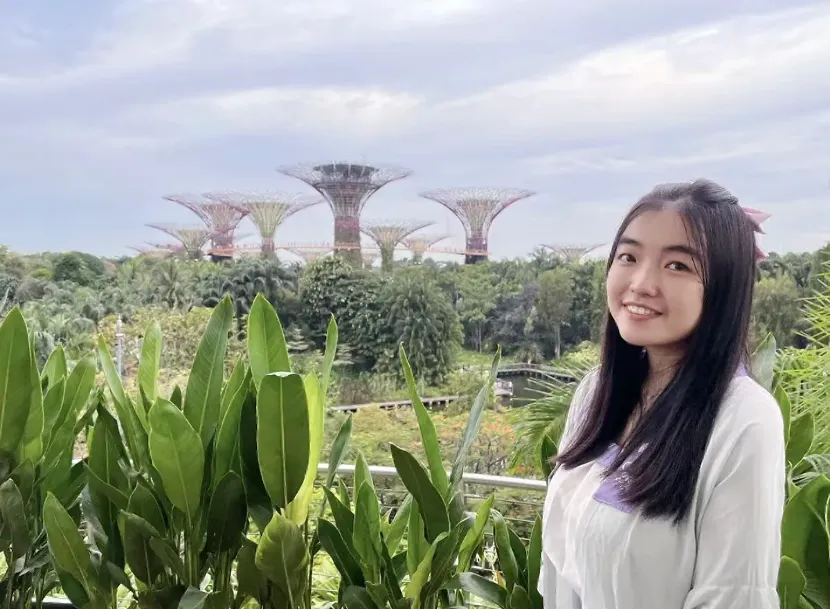
Alumni Spotlight: Loh Shu Yi, a 2021 Software Engineering graduate, currently works as a Software Engineer at a software development company in Singapore.
Image
Q1: Could you briefly introduce yourself?
I'm Loh Shu Yi. I graduated from the Software Engineering programme in April 2021 and am currently working as a Software Engineer in Singapore. My company mainly develops and maintains websites and web applications for the Singapore government and private organisations.
Q2: What has your career journey been like since graduation?
My final semester at university was an internship, where I worked in IT operations at a company in Malaysia. I joined the company full-time after completing my internship.
After working there for a little over a year, the company gave me a salary adjustment, but the increase was not what I had expected. So I started looking for other opportunities on JobStreet and eventually found my current job in Singapore.
I have now been working here for almost four years, and I have also obtained Singapore Permanent Resident (PR) status.
Q3: Could you tell us a little about your day-to-day work?
I mainly work on web operations and maintenance, making sure websites run properly and do not go down.
Sometimes clients have new requirements, such as wanting to add new functions to their websites, and they will approach us to develop them.
If clients encounter problems, they will contact us and we help troubleshoot them. If they suddenly have a new request, we estimate the cost, and if they decide to proceed, we work out a plan for it.
Basically, it's a nine-to-five job, with weekends off. There are occasional periods when we need to work overtime, but that is relatively rare.
Q4: Has there been a moment at work that gave you a strong sense of accomplishment?
A sense of accomplishment usually comes together with a sense of relief. It usually happens when something I have developed goes live and runs stably, or when a client urgently needs something and the workload is huge, but we still manage to complete it within the deadline.
Recently, we had to upgrade all the code for a website. It was extremely busy, and there were times when I worked for 12 or 13 hours a day. But once everything was done, I had that feeling of "Yep, I did a pretty good job".
Q5: With the rapid development of AI, how has it changed your work?
It depends on the project. My current clients are relatively conservative, and they do not allow us to directly put our code into AI tools.
But there are also companies that rely almost entirely on AI to write code, while employees mainly check the output, making sure the code actually works. This is a major change happening in our industry right now.
Q6: In this situation, what do you think is the most important quality for a software engineer?
Taking responsibility for the code generated by AI. You have to make sure that what AI produces actually works.
Q7: Looking back, how has what you learned at university helped you in your current work?
Compared with some other universities, our programme already had quite a lot of hands-on work. We had to build websites, develop apps and so on.
However, there are many different branches within the software industry, and each branch involves many different programming languages and technologies. The industry is constantly evolving, so it is impossible for a university to teach you everything.
For fresh graduates, interviewers understand that you have just graduated, so they generally will not be too demanding about your technical knowledge. They tend to look more at your personal qualities and potential.
In terms of coursework, the Final Year Project (FYP) is usually one of the things interviewers ask about most. It shows why you came up with the idea, what problems you encountered and how you overcame them.
So, an undergraduate degree is more like a stepping stone that helps you enter the next stage of your career. It helps you land your first job.
Q8: What are some of your most memorable experiences at university?
I worked as a student assistant in the IT Department for three years, helping lecturers solve classroom problems, deal with computer systems, register equipment and so on.
During that time, I realised that what you learn at university and what you actually use at work can be quite different. Beyond professional knowledge, your ability to solve problems and the way you approach them may be even more important.
The university was still relatively new at the time, so we had the opportunity to be involved in all kinds of things. It was really interesting, and I also met many wonderful people. I would definitely recommend juniors to apply for student assistant positions.
I also met my boyfriend at university. We were classmates, and he is now in Singapore too. He moved here with me when I changed jobs.
I also met my roommate and close friend, Kai Xin, through a student club. We are still very good friends today.
Q9: If you could go back to university, what would you do differently?
I would just take the time to fully enjoy university life again.
Q10: Could you share a little about your life now, or something that has made you particularly happy recently?
My boyfriend and I bought a house in Kuala Lumpur, and we are about to start renovating it. Once the renovation is finished, we plan to move back.
Another thing is that in May this year, I flew to Shanghai by myself to watch an Identity V esports match. It is a game I really enjoy. So I guess I can now tick off the achievement of travelling abroad alone.
Q11: What are your plans for the future?
Our current plan is to return to Malaysia.
Singapore has convenient transportation and good salaries, but it is also a high-intensity, high-pressure and fast-paced country. That kind of lifestyle is not necessarily suitable for everyone.
Singapore is also quite small, so if you want to travel or get away for a few days, there are not that many options.
So, we have decided to return to Kuala Lumpur, find similar jobs, earn a normal living and live a normal life.
Q12: Is there anything else you would like to add?
XMUM really is a great choice for university.
When I get the chance, I would love to go back and visit the library. I had been looking forward to using it for years, but I graduated before I ever got the chance.
The guests in this series are either self-nominated alumni or recommended by classmates. If you would also like to share stories about your career and life after graduation, please feel free to contact news@xmu.edu.my.