XMUM Researchers Explore New Applications for Malaysia’s Durian Industry
Published on July 6, 2026
Xiamen University Malaysia (XMUM) researchers are conducting ongoing interdisciplinary research on durian to support Malaysia’s durian industry, lications and food innovation.
The researches addresses challenges in cultivation, processing and by-product utilisation, exploring how durian fruits, husks and seeds can be developed into new applications in agriculture, materials science, food technology and sustainability.
01 AI-Powered Durian Counting
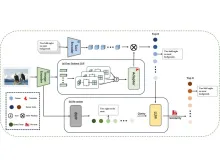
Prof. Dr. Zhang Yingqian’s team from the School of Artificial Intelligence and Robotics (SAIR) has developed an AI visual recognition system for durian farms. By taking a panoramic photo of a tree canopy with a smartphone, the system can automatically count the number of durians on a tree within seconds.
Designed for tall trees and fruit occlusion, the system has achieved a prediction accuracy of 96%, supporting yield estimation, harvest planning and sales management. The team has also developed DurianGPT, a multilingual AI assistant for pest and disease diagnosis, fertilisation management and weather risk analysis. Related AI models are protected by digital watermarking technology to verify model sources and prevent unauthorised use.
Image
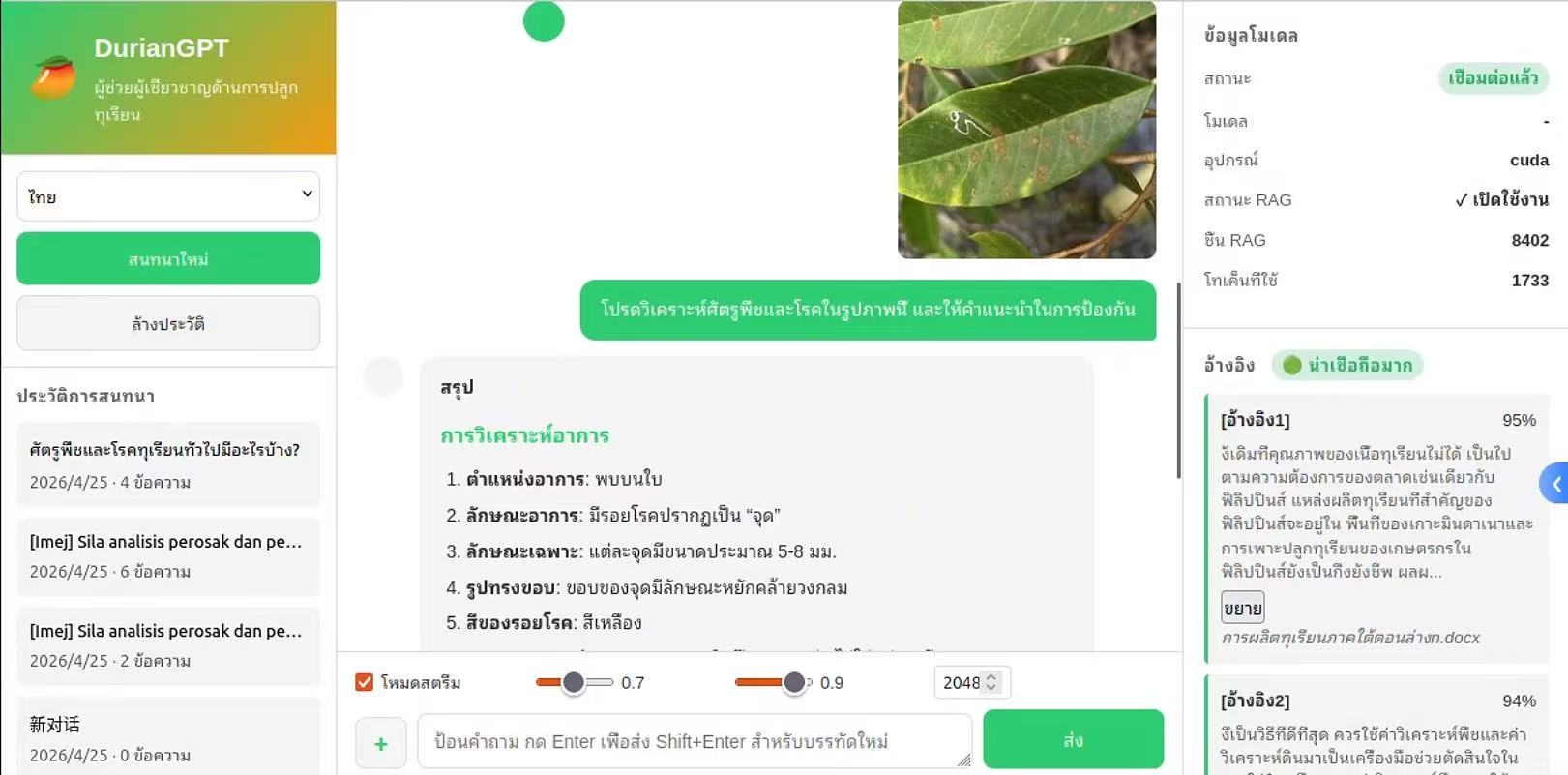
DurianGPT
02 AI-CFD Technology for Precision Fertilisation
Assoc. Prof. Ir. Dr. Ban Zhen Hong’s team from the School of Energy and Chemical Engineering is applying AI-CFD technology to improve fertilisation management in durian farms.
By integrating computational fluid dynamics, artificial intelligence and Internet of Things (IoT) technologies, the team reconstructs durian farm terrain, collects real-time sensor data and simulates fertiliser movement in soil. The research aims to improve fertilisation efficiency and nutrient utilisation, with potential applications in smart agriculture, waste gas treatment, waste-to-energy processes and industrial process optimisation.
03 Nanocellulose Materials from Durian Husks
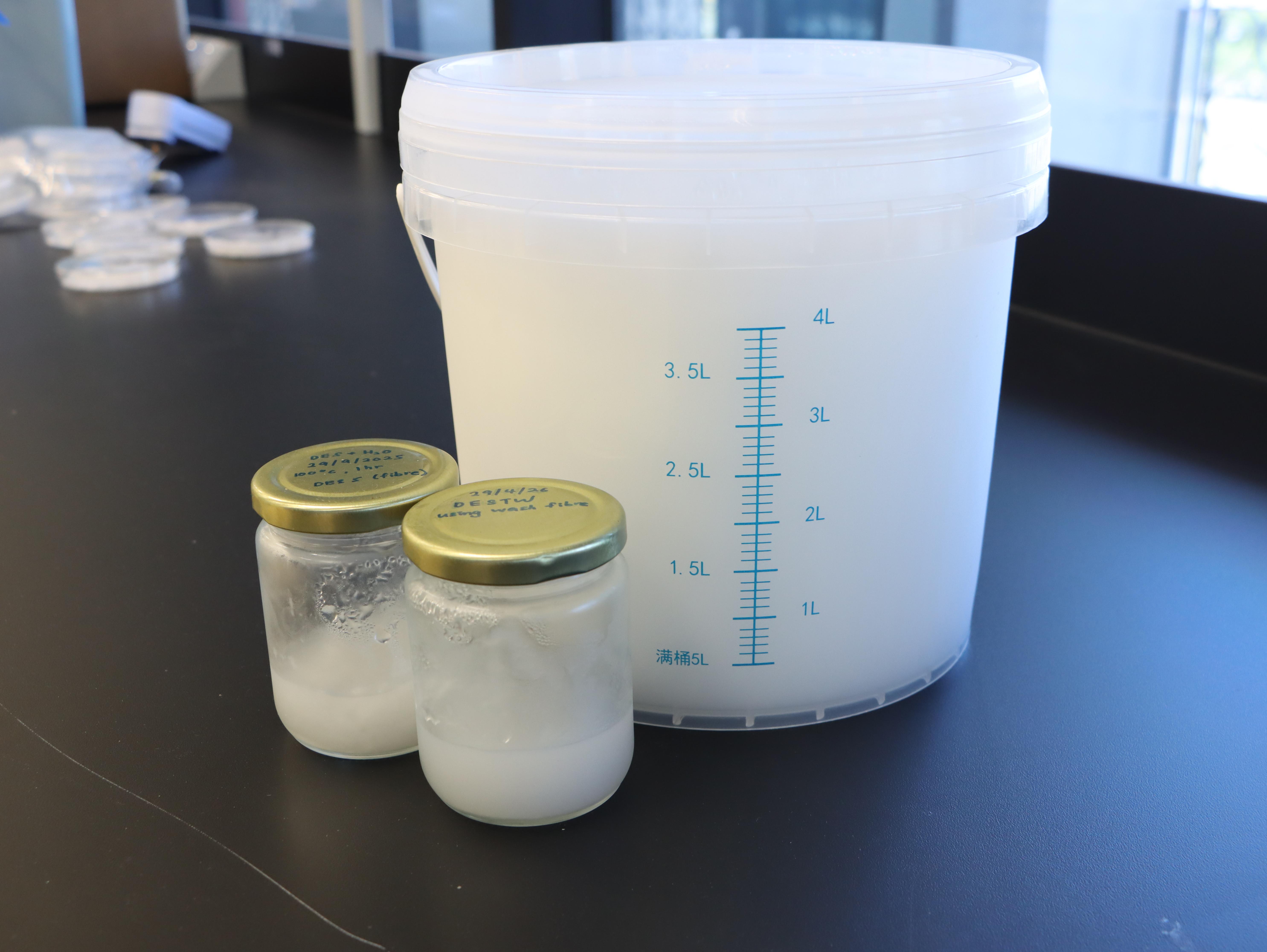
Assoc. Prof. Dr. Tan Khang Wei’s team is studying durian husks as a source of sustainable materials. By extracting plant fibres from durian husks, the team processes them into nanocellulose materials.
Image
Nanocellulose
These materials are naturally biodegradable, about half the weight of aluminium, and possess strong mechanical stability. They show potential for applications in aerospace, automotive manufacturing, robotics, cosmetic cream stabilisation and eco-friendly food packaging films.
04 Biochar and Soil Applications from Durian Husks
Asst. Prof. Dr. Yee Kian Fei’s team is exploring durian husk utilisation through natural pectin extraction and biochar development.
The research studies the potential use of durian pectin in food, pharmaceutical and agricultural products. After pectin extraction, the remaining husk biomass can be converted into biochar for further research in soil improvement and controlled-release fertiliser development.

05 Food Innovation Using Durian Seeds
Asst. Prof. Dr. Kua Yin Leng’s team is developing durian seed-based functional materials, including durian seed flour, durian seed gum and durian seed gelator.
Durian seed flour can be used in low-gluten bakery products, while durian seed gum can serve as a natural fruit juice stabiliser. The gum can also be combined with natural deep eutectic solvents to form eutectogel, a gel-like material for natural food coating applications. Durian seed gelator can convert liquid oil into semi-solid oleogel for use in cream bases, food formulation improvement and potentially as a trans fat-free shortening substitute.

Oleogel